EV Battery Replacement Cost: What You’ll Pay by Model in 2026

The battery is the most expensive part of an electric car, and the fear of replacing it keeps many people from buying one, new or used. The real numbers are less frightening than the stories. Most EV batteries outlast their warranty, few are ever replaced, and when one is, the bill depends heavily on the model, the size of the pack and whether you replace the whole thing or only the faulty part. This guide gives typical 2026 replacement costs by model, explains what drives the price, and shows the cheaper alternatives and the point at which replacing a battery stops making sense.
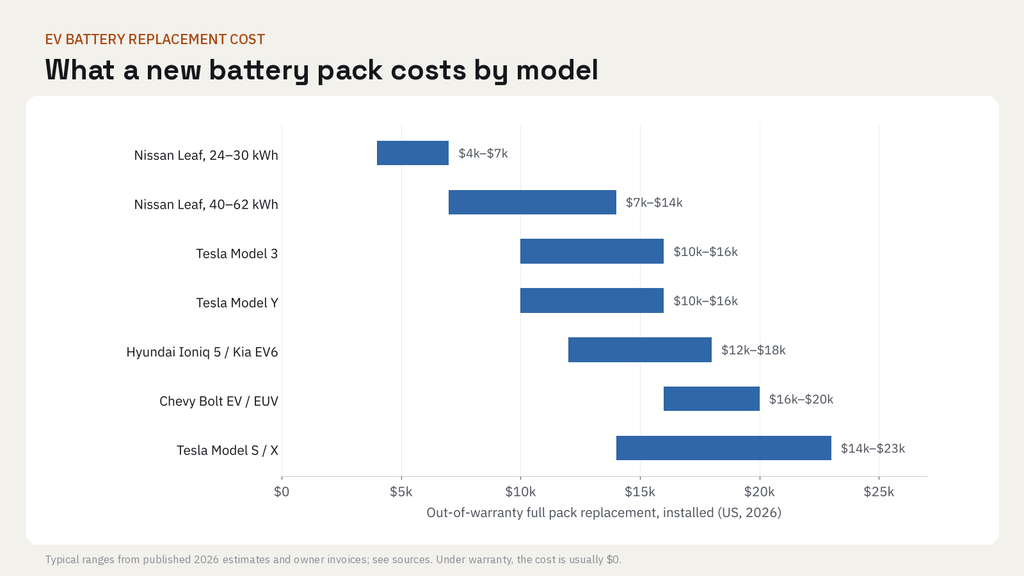
Short answer: An out-of-warranty EV battery replacement in the US typically costs $4,000 to $7,000 for an older Nissan Leaf, $10,000 to $16,000 for a Tesla Model 3 or Model Y, $12,000 to $18,000 for a Hyundai Ioniq 5 or Kia EV6, and $16,000 to $20,000 for a Chevy Bolt at a dealer. Large packs in luxury cars and trucks can pass $25,000. Every major brand covers the battery for at least 8 years and 100,000 miles in the US, so most owners never pay anything. Replacing individual modules or buying a refurbished pack can cut the bill by thousands.
Key takeaways
- Replacements are rare. Recurrent puts the replacement rate for 2022 and newer EVs at about 0.3%, outside of recalls.
- The warranty does most of the work. At least 8 years and 100,000 miles, usually with a guarantee that the battery keeps 70% of its capacity. Hyundai and Kia cover 10 years.
- Price scales with pack size. A 24 kWh Leaf pack and a 100 kWh Model S pack are different purchases, even though both are called “the battery.”
- Repair is often cheaper than replacement. Many failures are a single module, a sensor or a contactor, not the whole pack.
- Retail is far above factory cost. EV battery packs cost automakers about $99 per kWh in 2025, but a replacement pack, shipped and installed, costs two to three times that.
EV battery replacement cost by model
The table shows typical out-of-warranty costs for a complete battery pack, including labor, in the US in 2026. Quotes vary by region, by dealer and by whether the pack is new, remanufactured or used.
| Model | Pack size | Typical replacement cost (installed) | Notes |
|---|---|---|---|
| Nissan Leaf (2011–2017) | 24–30 kWh | $4,000–$7,000 | Large market for used and refurbished packs |
| Nissan Leaf (2018–2025) | 40–62 kWh | $7,000–$14,000 | Upgrading an older Leaf to a 40 kWh pack is common |
| Tesla Model 3 | About 57–82 kWh | $10,000–$16,000 | Rear-wheel-drive LFP packs at the lower end |
| Tesla Model Y | About 60–82 kWh | $10,000–$16,000 | Similar packs and labor to the Model 3 |
| Hyundai Ioniq 5 / Kia EV6 | 58–84 kWh | $12,000–$18,000 | Few real invoices yet; modules can be replaced individually |
| Chevrolet Bolt EV / EUV | 65–66 kWh | $16,000–$20,000 | Dealer price; most packs were already replaced under the 2021 recall |
| Tesla Model S / X | About 60–100 kWh | $14,000–$23,000 | One 2026 quote ranged from about $13,800 (60 kWh) to $23,300 (90 kWh) |
| BMW i3 | 22–42 kWh | About $6,500 (independent) to $18,000+ (dealer) | Shows how much the source of the pack matters |
| Large trucks and luxury SUVs | 100–200 kWh | $25,000 and up | Very few out-of-warranty cases so far |
Why a replacement pack costs so much more than the factory pack
BloombergNEF’s 2025 battery price survey put the average lithium-ion pack for battery electric vehicles at $99 per kWh, and lithium iron phosphate (LFP) packs across all uses at $81 per kWh. On those numbers, the 75 kWh pack in a long-range Model 3 costs an automaker roughly $7,500 to build. A replacement for the same car costs about twice that. The gap comes from several places:
- Service parts are low volume. Packs for older models are built in small batches or held in stock for years.
- Shipping a battery is expensive. A pack weighs 300 to 700 kg and travels as hazardous goods.
- Labor and calibration. Dropping a pack, transferring parts, refilling coolant and programming the battery management system takes most of a day, typically $1,000 to $2,500.
- Dealer margin and warranty on the new part. A new pack usually comes with its own warranty, which is priced in.
Chemistry matters too. LFP packs, used in many standard-range EVs, are cheaper per kWh than nickel-based NMC and NCA packs, and they also degrade more slowly. Our LFP vs NMC guide explains the difference.
How often EV batteries actually need replacing
Very rarely, at least for cars built in the last five years. Recurrent, which tracks battery health across thousands of EVs in the US, reports a replacement rate of about 0.3% for model years 2022 and later, excluding recalls. Earlier EVs were less durable: Recurrent puts the rate at about 8.5% for first-generation EVs and about 2% for the second generation, with the first-generation Nissan Leaf and early Tesla Model S accounting for a large share of replacements.
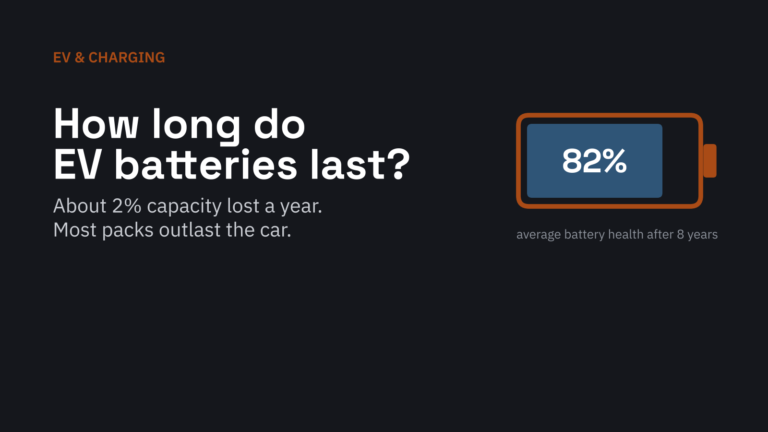
Most batteries lose capacity slowly rather than failing outright, so a replacement is usually a choice made years after the range has started to shrink, not a sudden breakdown. Our guide to how long EV batteries last covers degradation in detail.
What the battery warranty covers
Every major automaker in the US covers the high-voltage battery for at least 8 years or 100,000 miles. Most also promise that the battery will keep at least 70% of its original capacity during that period. If it falls below that, or fails from a defect, the manufacturer repairs or replaces it at no charge.
| Brand | Battery warranty (US) | Capacity guarantee |
|---|---|---|
| Tesla Model 3 / Y | 8 years, 100,000–120,000 miles | 70% |
| Tesla Model S / X | 8 years, 150,000 miles | 70% |
| Hyundai, Kia, Genesis | 10 years, 100,000 miles | 70% |
| Ford, GM, Volkswagen, Nissan | 8 years, 100,000 miles | 70% (older Leafs: fewer than 9 of 12 capacity bars) |
| Rivian | 8 years, up to 175,000 miles | 70% |
California’s Advanced Clean Cars II rules, followed by several other states, add requirements for 2026 and later models, including a 70% state-of-health warranty threshold. Two things trip owners up. First, the clock starts on the car’s original sale date, so a used EV may have little coverage left. Second, capacity loss is measured by the manufacturer’s diagnostics, not by the range shown on the dashboard.
Cheaper alternatives to a new pack
- Module replacement. Many packs are made of modules. If one module is weak, replacing it can cost a few thousand dollars instead of the full pack. Hyundai’s E-GMP cars and GM’s Ultium packs are designed for this.
- Repairing the real fault. A battery warning is often caused by a failed sensor, contactor, fuse or cooling part. A proper diagnosis comes first.
- Remanufactured or used packs. Independent specialists rebuild packs with tested cells or source them from salvaged cars, often 20% to 40% below the dealer price. Ask about the warranty on the pack.
- Upgrades for older cars. Some Nissan Leaf owners replace a worn 24 or 30 kWh pack with a 40 kWh or larger one, gaining range for not much more money.
One caution: some brands, Tesla in particular, tie the battery management system to the car, and fitting a non-factory pack can void remaining warranty coverage or cause software problems. Check before you commit.
Is replacing the battery worth it?
Compare the quote with the car’s value after the repair, not before. A simple rule of thumb:
- Replace it if the rest of the car is in good shape, you plan to keep it for years, and the repair costs less than about half of what the car would be worth with a healthy battery.
- Consider a used or remanufactured pack on an older car worth less than the price of a new battery.
- Sell or trade it in if the replacement would cost close to the car’s full value. A car with a weak but working battery still has buyers, especially among people with short commutes.
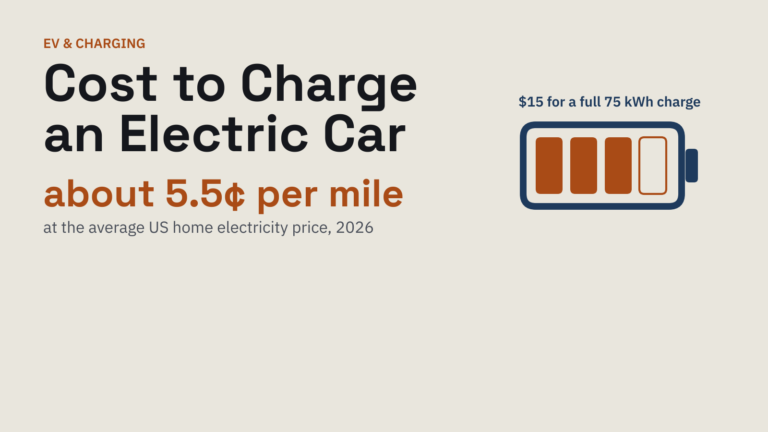
Remember the other side of the ledger. Even with an occasional battery bill, an EV saves on fuel and maintenance every year. Our cost to charge an electric car calculator shows the yearly fuel savings for your own driving.
How to avoid a battery replacement
- Keep everyday charging between about 20% and 80% for nickel-based batteries; LFP batteries can be charged to 100% more often, as most manufacturers recommend.
- Avoid leaving the car parked for long periods at 100% or near 0%, especially in hot weather.
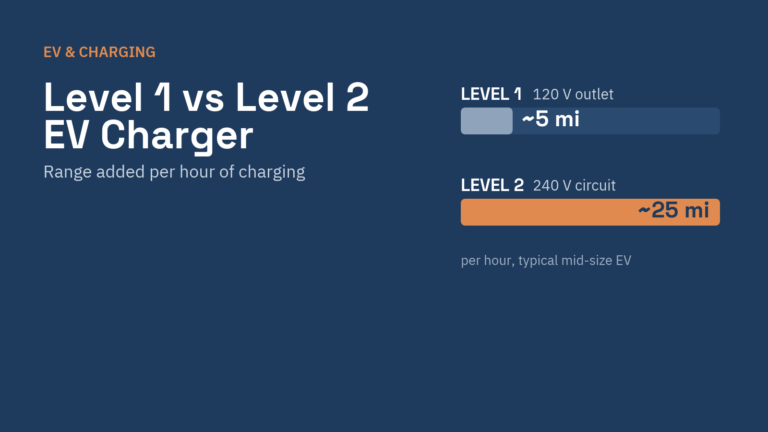
- Use DC fast charging when you need it, but rely on Level 2 charging at home day to day. See our guide to Level 1 vs Level 2 chargers.
- When buying used, get a battery health report and check how much warranty is left.
Frequently asked questions
How much does it cost to replace a Nissan Leaf battery?
About $4,000 to $7,000 installed for the 24 and 30 kWh packs in 2011–2017 Leafs, and about $7,000 to $14,000 for the 40 and 62 kWh packs in later cars. Used and refurbished packs can cost less. The redesigned 2026 Leaf uses a larger 75 kWh pack and has no real replacement data yet.
How much is a Tesla battery replacement?
About $10,000 to $16,000 for a Model 3 or Model Y and about $14,000 to $23,000 for a Model S or Model X, out of warranty and installed at a Tesla service center. Tesla’s battery warranty runs 8 years, with 100,000 to 150,000 miles depending on the model.
Does car insurance cover EV battery replacement?
Only when the damage comes from an insured event, such as a collision, flood, fire or vandalism. Normal wear and capacity loss are not covered by insurance; that is what the manufacturer’s warranty is for.
Will EV battery replacement get cheaper?
Very likely. Battery pack prices have fallen by more than 90% since 2010, according to BloombergNEF, and more independent repair shops and remanufactured packs are appearing as older EVs age. A replacement in 2030 should cost noticeably less than one today.
What happens to the old battery?
It is usually returned to the manufacturer or a recycler. Packs with useful capacity left can be reused for stationary storage, and the rest are recycled to recover lithium, nickel, cobalt and copper. A battery that is too worn for a car can still be useful in a home battery system.
Can you replace only part of an EV battery?
Often, yes. Packs built from modules can be repaired by replacing the weak module, which costs far less than a full pack. Some newer cell-to-pack designs are harder to repair this way.
Sources
- Find My Electric: Tesla Model 3 battery replacement cost (2026)
- Find My Electric: Nissan Leaf battery replacement cost explained
- Find My Electric: Chevy Bolt battery replacement cost
- EV Seekers: EV battery replacement cost by brand (2026)
- Recharged: How much does it cost to replace an EV battery?
- SoFi: EV battery replacement cost (May 2026)
- Gizmodo: New data shows EV batteries are lasting longer than expected (Recurrent data)
- Business Insider: These electric vehicles need their batteries replaced most often (Recurrent data)
- BloombergNEF: Lithium-ion battery pack prices fall to $108 per kilowatt-hour (December 2025)
- GreenCars: EV battery warranties and exclusions
- Recurrent: Best warranties for electric cars
- Kelley Blue Book: Electric car battery warranty quick facts
Featured image and chart: original graphics by CleanTech Explained. Prices are typical US ranges as of November 2026 and vary by region, shop and pack source. This article is general information, not financial or repair advice.