Bonded Magnets Explained: How Bonded NdFeB Compares With Sintered Magnets
Bonded magnets mix magnet powder with a plastic binder. Here is how bonded NdFeB is made, how strong and heat resistant it is, and where it beats sintered magnets.
Permanent magnets sit inside almost every EV motor and wind turbine, and most of them depend on rare earths. This section is written by a materials engineer specializing in magnetic materials and covers every major magnet family, from neodymium magnets to rare-earth-free options such as iron nitride. The complete guide to rare earth magnet alternatives is the best place to start.
Bonded magnets mix magnet powder with a plastic binder. Here is how bonded NdFeB is made, how strong and heat resistant it is, and where it beats sintered magnets.

China’s rare earth export controls now have a new date: January 10, 2027. On November 9, 2026, a day before a one-year pause was due to run out, Beijing published a notice keeping its sweeping October 2025 package suspended for two more months. The April 2025 licensing rules for dysprosium, terbium and five other rare…
Renault, BMW and Nissan drive their EVs with a motor that has no magnets at all. Here is how an EESM works, where it beats a magnet motor and where it falls short.
Neodymium is the rare earth that makes the strongest magnets possible. Here is what it is, what it is used for, where it comes from and what it costs.
Terbium is one of the rarest rare earths. A fraction of a percent keeps neodymium magnets working when they get hot. Here is what it is used for, where it comes from and why it costs so much more outside China.
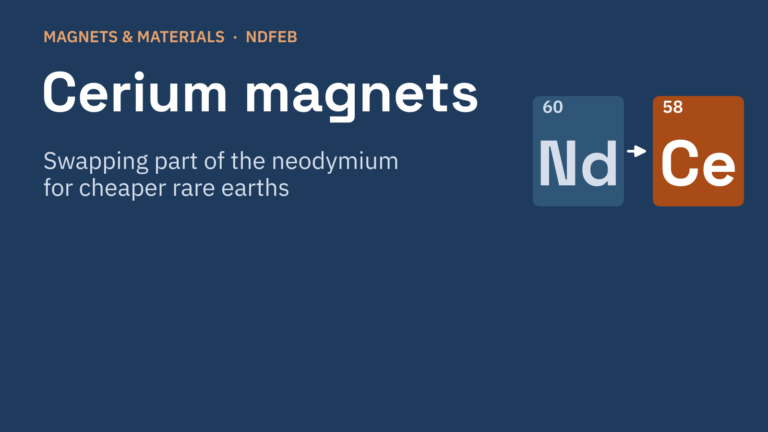
A cerium magnet is a neodymium magnet in which part of the neodymium has been replaced with cerium, the cheapest and most plentiful rare earth. It is not a new magnet family so much as a cost-cutting recipe for the existing one, and it has quietly become one of the biggest product lines in China’s…
Cerium is the most abundant rare earth and the hardest to sell. Here is what it is used for, how cerium oxide polishes glass, and why every new magnet mine makes a cerium surplus.
Praseodymium is the “green twin” of neodymium and makes up about a quarter of the rare earths in most strong magnets. Here is what it does, where it comes from, and who produces it.
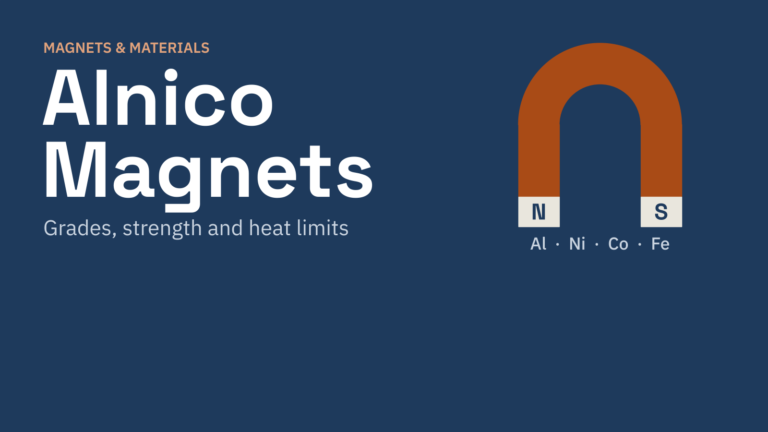
Alnico magnets were the strongest permanent magnets in the world for about four decades, until rare earth magnets arrived in the 1970s. They are no longer the strongest, but they have not gone away. Alnico still does two things better than any other common magnet: it survives extreme heat, and its field barely drifts as…
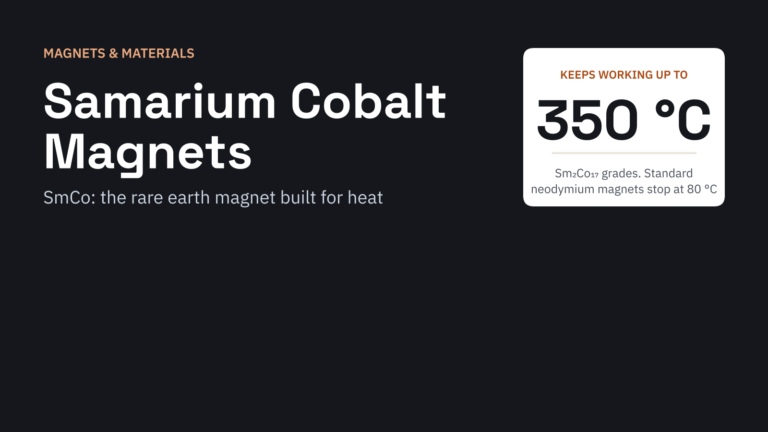
Samarium cobalt magnets were the first rare earth magnets. They are weaker than neodymium at room temperature but keep working at 350 °C.