Which EVs Don’t Use Rare Earth Magnets?

Most electric vehicles use rare earth magnets in their motors, but a growing number do not. EVs without rare earth magnets in their drive motors are already on sale from BMW, Renault and Nissan, and several used models are easy to find. This guide lists every one we know of, explains how their motors work, and answers the question buyers really care about: does it make any difference?
The short answer
These EVs use drive motors with no rare earth permanent magnets:
- BMW: the new iX3 and i3 built on the Neue Klasse platform, plus the i4, iX, i5, i7 and iX1 with BMW’s fifth-generation eDrive.
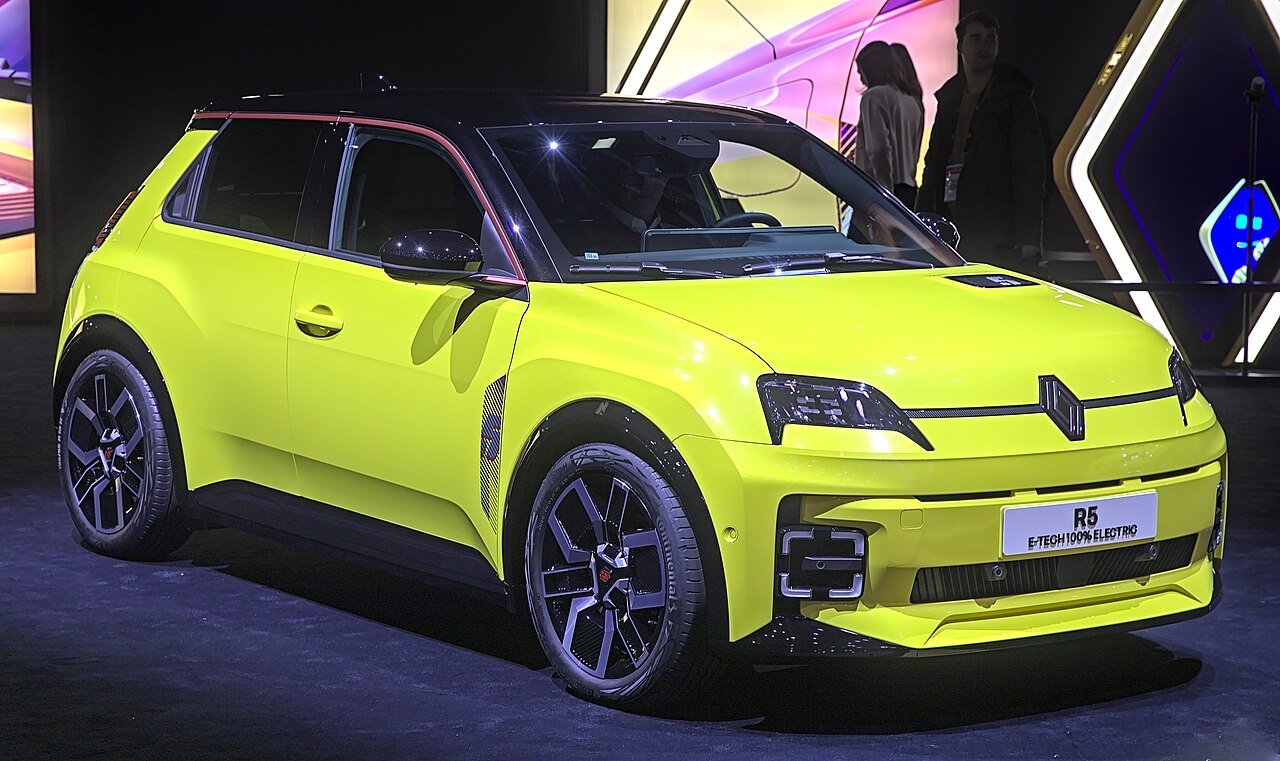
- Renault: Megane E-Tech Electric, Scenic E-Tech Electric and Renault 5 E-Tech, along with older models such as the Zoe, Twingo Electric and Kangoo.
- Nissan: Ariya.
- Audi: the original e-tron and the Q8 e-tron (production ended in February 2025, so these are now used cars).
Several other EVs use one magnet-free motor and one rare earth magnet motor, so they are only partly rare-earth-free. We cover those further down.
Why most EVs use rare earth magnets
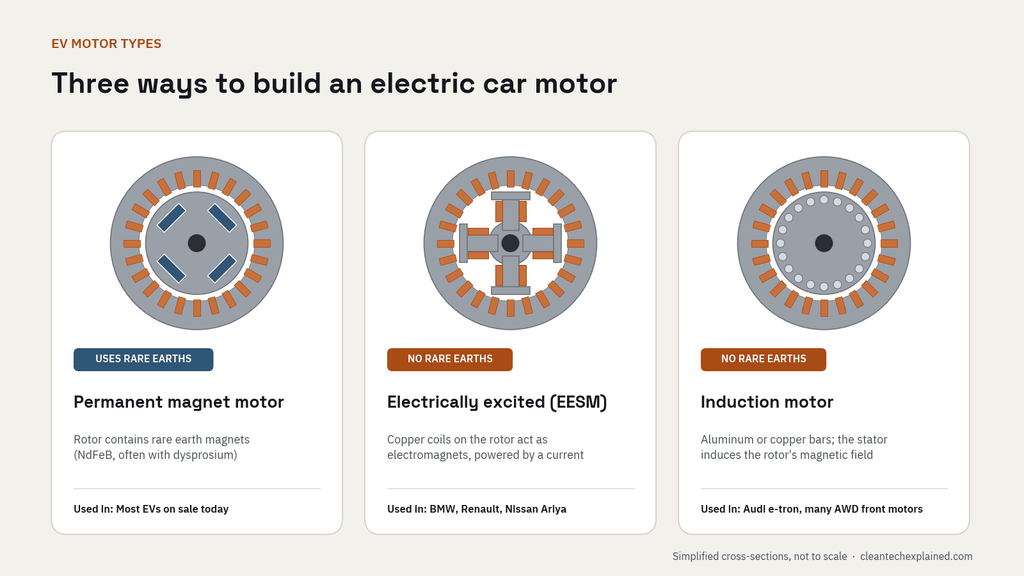
The majority of electric cars use permanent magnet synchronous motors. Their rotors contain neodymium-iron-boron (NdFeB) magnets, usually with some dysprosium or terbium added so the magnets survive high temperatures. These motors are compact, light and very efficient, which is why they became the industry default.
The problem is supply. Rare earth mining, refining and magnet production are concentrated in China, which has restricted exports of several rare earth elements since 2025. Automakers that avoid rare earth magnets are less exposed to those disruptions and to the price swings that come with them.
How EVs avoid rare earth magnets
There are two proven motor designs that need no permanent magnets at all.
Electrically excited synchronous motors (EESM)
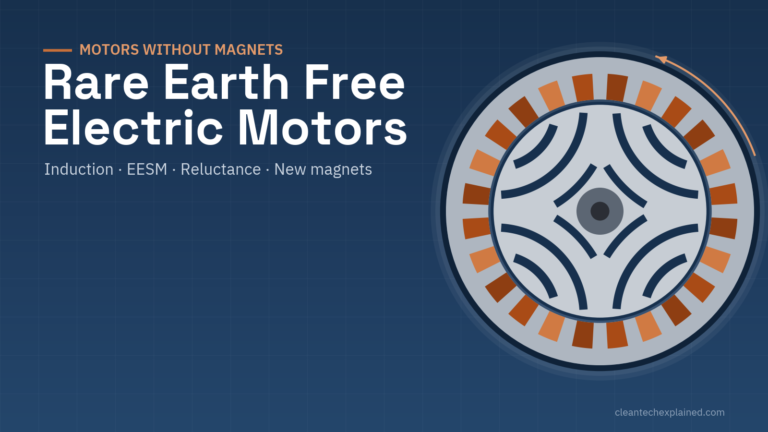
An EESM replaces the rotor’s permanent magnets with copper coils. A small electric current flows into those coils and turns the rotor into an electromagnet. You may also see these motors called wound-rotor synchronous motors, separately excited synchronous motors or current-excited synchronous motors. They are all the same basic idea.
A key advantage is control. Because the magnetic field comes from a current, the motor can weaken it when full power is not needed, which cuts losses at motorway speeds. The trade-offs are extra complexity, the need to pass current into a spinning rotor, and some heat generated in the rotor windings.
Induction motors
Induction motors, also called asynchronous motors, create the rotor’s magnetic field by induction from the stator. They are rugged and cheap, and they spin freely with almost no drag when switched off, which makes them ideal as secondary motors in all-wheel-drive EVs. Their downside is lower efficiency than permanent magnet motors at typical driving loads, so few carmakers use them as the only motor.
We explain how each design works, and the trade-offs, in our complete guide to rare earth free electric motors.
Full list of EVs without rare earth magnets
| Brand | Models | Motor type | Status |
|---|---|---|---|
| BMW | iX3 and i3 (Neue Klasse) | EESM rear, induction front on AWD versions | On sale |
| BMW | i4, iX, i5, i7, iX1 | EESM (fifth-generation eDrive) | On sale |
| BMW | iX3 (2020 generation) | EESM | Used |
| Renault | Renault 5 E-Tech | EESM | On sale |
| Renault | Megane E-Tech Electric, Scenic E-Tech Electric | EESM | On sale |
| Renault | Zoe, Twingo Electric, Kangoo | EESM | Mostly used |
| Nissan | Ariya | EESM | On sale |
| Audi | e-tron, Q8 e-tron, SQ8 e-tron | Induction on both axles | Used (production ended 2025) |
Availability varies by country, and carmakers can change suppliers or motor designs between model years. If rare-earth-free motors matter to your purchase, confirm the exact version with the manufacturer.
BMW
BMW has avoided rare earth magnets in its electric motors since its fifth-generation eDrive system, first built for the iX3 in 2020 and then used in the i4, iX, i7 and i5. These motors are current-excited synchronous motors, BMW’s name for EESMs.
The new Neue Klasse generation continues the approach. The latest iX3 pairs an EESM on the rear axle with an induction motor on the front axle, so neither motor needs rare earth permanent magnets. The electric i3 sedan on the same platform uses the same technology. With a WLTP range of up to 500 miles for the iX3 50 xDrive, these cars show that avoiding rare earth magnets does not have to mean giving up range.
Renault
Renault has sold EESM-powered EVs longer than anyone. The technology debuted in the Kangoo Z.E. in 2011 and the Zoe in 2012, and Renault has used it across its electric range ever since. The Megane E-Tech Electric introduced a smaller, lighter second-generation motor of up to 160 kW in 2022, followed by the Scenic E-Tech Electric.
The Renault 5 E-Tech uses a compact version of the Megane’s motor, with a shorter rotor to fit the small car. Renault is also developing a third-generation EESM with 200 kW of output for its future 800-volt models.
Nissan
The Nissan Ariya, launched in 2022, uses an EESM with a copper-wound rotor instead of permanent magnets. Engineering teardowns have highlighted it as a well-packaged example of a magnet-free motor in a mass-market EV.
Audi
Audi’s first electric SUV, the e-tron, later renamed Q8 e-tron, used induction motors on both axles, and the high-performance SQ8 e-tron used three. Audi said a major advantage of this design was that the motors needed no rare earth magnets. Production ended in February 2025, but these cars are widely available on the used market.
Audi’s newer EVs have moved to a mixed approach, described below.
EVs that are only partly rare-earth-free
Many all-wheel-drive EVs combine a permanent magnet motor on one axle with a magnet-free induction motor on the other. The induction motor can switch off with little drag when not needed, while the permanent magnet motor handles most everyday driving. Examples include:
- Audi Q6 e-tron quattro: induction motor at the front, permanent magnet motor at the rear.
- Audi Q4 e-tron quattro and other all-wheel-drive models on Volkswagen’s MEB platform: permanent magnet motor at the rear, induction motor at the front.
These cars use less rare earth material than dual permanent magnet designs, but they still depend on rare earth magnets for their main motor.
Does a rare-earth-free motor mean a rare-earth-free car?
No. The drive motor is the biggest single use of rare earth magnets in an EV, but it is not the only one. Speakers, power steering, seat and window motors, pumps, fans and sensors often use small neodymium magnets too. An EV with rare-earth-free drive motors uses far less rare earth material, but it is unlikely to contain none at all.
Does it matter when you buy an EV?
For most drivers, the motor type makes little noticeable difference. EESM-powered cars like the BMW iX3 and Renault Megane deliver efficiency and range that are competitive with permanent magnet rivals, and induction motors in cars like the Audi e-tron proved durable and powerful.
Where it may matter:
- Supply and price stability. Carmakers that avoid rare earth magnets are less exposed to export restrictions, which can affect production and pricing.
- Environmental considerations. Rare earth mining and processing have significant environmental impacts, so avoiding them in the largest magnet in the car is a meaningful reduction.
- Efficiency at speed. EESMs can reduce their magnetic field at light load, which can help efficiency on the motorway.
If you are choosing between otherwise similar EVs, a rare-earth-free motor is a reasonable tiebreaker, but range, charging speed, Level 1 vs Level 2 charging, price and reliability should come first.
What comes next
More carmakers are working on rare-earth-free motors, including General Motors and Stellantis, and suppliers are developing new EESM and induction designs for mass-market cars. At the same time, new rare-earth-free magnet materials such as iron nitride could allow permanent magnet motors without rare earths later this decade. For the bigger picture, read our complete guide to rare earth magnet alternatives.
Planning to charge at home? See our guide to Level 1 vs Level 2 EV chargers.
Frequently asked questions
Do Tesla vehicles use rare earth magnets?
Yes. Current Tesla models use permanent magnet motors that contain rare earth magnets, at least for their main drive motor. Early Model S and Model X versions used induction motors, which contain no magnets.
Which BMW electric cars have no rare earths in the motor?
BMW’s fifth-generation eDrive models, including the i4, iX, i5, i7 and iX1, and the new Neue Klasse iX3 and i3 all use drive motors without rare earth permanent magnets.
Are rare-earth-free EV motors less efficient?
Not necessarily. Induction motors are usually less efficient at typical driving loads, but modern EESMs are competitive with permanent magnet motors and can be more efficient at high speed because their magnetic field can be reduced.
Does the Renault 5 use rare earth magnets?
No. The Renault 5 E-Tech uses an electrically excited synchronous motor derived from the Megane E-Tech Electric’s motor, which needs no permanent magnets or rare earths.
Is an EV without rare earth magnets better for the environment?
It avoids the rare earths in the largest magnet in the car, which reduces demand for mining and processing with significant environmental impacts. The overall footprint of an EV still depends much more on its battery, its efficiency and the electricity used to charge it.
Sources
- BMW Group, fifth-generation electric drive system: https://www.press.bmwgroup.com/canada/article/detail/T0440602EN/bmw%E2%80%99s-5th-generation-electric-drive-system-wins-2024-ajac-best-green-innovation-award?language=en
- BMW Group, e-drive production for iX and i4: https://www.press.bmwgroup.com/usa/article/detail/T0333497EN_US/e-drive-train-production-for-the-fully-electric-models-bmw-ix-and-bmw-i4-begins?language=en_US
- BMW Group, the new BMW iX3: https://www.press.bmwgroup.com/united-kingdom/article/detail/T0452406EN_GB/the-start-of-a-new-era-the-new-bmw-ix3?language=en_GB
- Mobility Engineering Technology, the EV tech of BMW’s Neue Klasse iX3: https://www.mobilityengineeringtech.com/component/content/article/53859-sae-ma-07661
- Design News, BMW i3 sedan: https://www.designnews.com/automotive-engineering/bmw-i3-sedan-delivers-neue-klasse-tech
- Renault Group, electric motors with no rare earths: https://www.renaultgroup.com/en/magazine/energy-and-powertrains/all-about-electric-motors-with-no-rare-earths/
- Motor1, Renault 5 E-Tech Electric first drive: https://www.motor1.com/reviews/737138/renault-5-electric-2024-first-drive/
- Lean Design, Nissan Ariya magnet-free motor teardown: https://leandesign.com/nissan-ariya-magnet-free-motor-teardown/
- Audi, Q8 e-tron drive system: https://www.audi.com/en/the-audi-q8-e-tron-until-2025-15069/improved-efficiency-longer-range-drive-system-15073
- Audi USA, Q6 e-tron: https://media.audiusa.com/releases/609
Featured image: Renault 5 E-Tech at GIMS 2024 by Alexander-93, CC BY-SA 4.0, via Wikimedia Commons.