Rare Earth Free Electric Motors: The Complete Guide

Almost every electric car sold today is driven by a permanent magnet motor, and almost every one of those magnets is made of neodymium, iron and boron, often with a little dysprosium or terbium added. That works brilliantly on the road and badly on a map: most rare earth refining and magnet making happens in a single country. Rare earth free electric motors sidestep the problem by producing torque without rare earth magnets at all. This guide explains the main designs, which cars already use them, what they cost you in efficiency and size, and what is coming next.
Short answer: There are four proven families of rare earth free electric motors: induction motors, electrically excited synchronous motors (EESM), synchronous reluctance motors and switched reluctance motors. A fifth route keeps the permanent magnet design but swaps in magnets made without rare earths, such as ferrite or, in future, iron nitride. Induction motors and EESMs are already in mass-produced cars from Tesla, Audi, Volkswagen, Renault, Nissan and BMW.
Key takeaways
- Permanent magnet synchronous motors (PMSM) with NdFeB magnets dominate EVs because they are compact and very efficient at everyday driving speeds.
- Rare earth free motors replace the magnet with either induced current (induction), a powered copper winding (EESM) or a cleverly shaped steel rotor (reluctance motors).
- The trade-offs are real but manageable: slightly more heat in the rotor, more complex control, or a little more size for the same torque.
- Many automakers now mix motor types, pairing an efficient main motor with a magnet-free motor on the second axle.
- Next-generation brushless EESMs from ZF, Mahle and Valeo aim to match permanent magnet motors on size and efficiency later this decade.
Why most EV motors use rare earth magnets
In a permanent magnet synchronous motor, magnets buried in the rotor provide a strong magnetic field for free. The stator’s rotating field simply pulls that magnetized rotor around. Because no energy is spent creating the rotor field, PMSMs are exceptionally efficient at the low and medium loads where cars spend most of their time, and they pack a lot of torque into a small, light package.
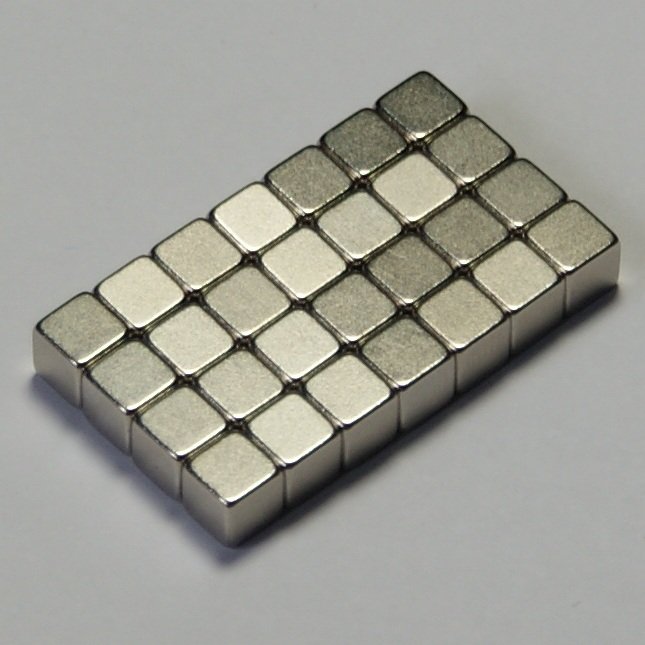
The magnet of choice is neodymium-iron-boron (NdFeB), the strongest commercial permanent magnet. Traction motors run hot, and NdFeB loses coercivity (its resistance to demagnetization) as temperature rises. To compensate, magnet makers add heavy rare earths, mainly dysprosium and terbium. Industry estimates vary with motor size, but a typical EV traction motor contains on the order of one to two kilograms of magnet material.
For a deeper look at the magnets themselves and the materials that could replace them, see our complete guide to rare earth magnet alternatives.
Why automakers want motors without rare earths
Supply concentration. According to the International Energy Agency, China accounted for roughly 91% of global rare earth refining and separation and 94% of sintered permanent magnet production in 2024. No other stage of the EV supply chain is quite this concentrated.
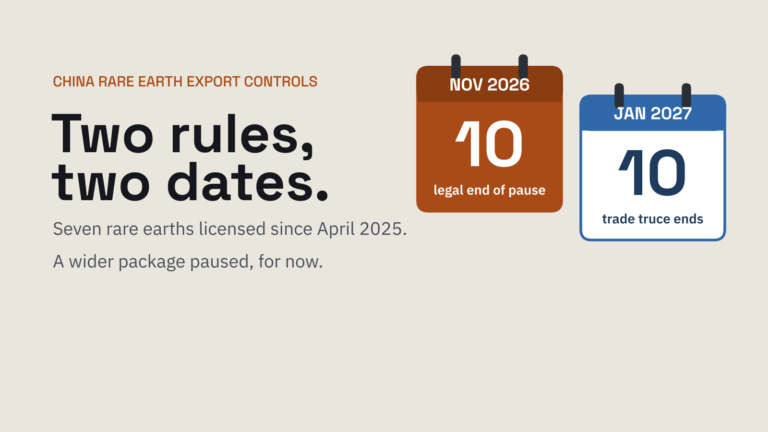
Export controls. Since April 2025, China has required case-by-case export licences for seven medium and heavy rare earths, including dysprosium and terbium, along with magnet materials that contain them. A broader package of controls announced in October 2025 was suspended until November 10, 2026. The disruption is not theoretical: Ford idled its Chicago assembly plant for a week in May 2025 because of a magnet shortage. Our critical minerals list explains why these elements appear on nearly every government’s watch list.
Cost and carbon. Rare earth prices swing sharply, and mining and separating them is energy- and chemical-intensive. Suppliers developing magnet-free motors claim production carbon footprints 30% to 50% lower than comparable permanent magnet motors, although these are manufacturer figures rather than independent audits.
The four main types of rare earth free electric motors

1. Induction motors (asynchronous motors)
An induction motor has no magnets and no power connection to its rotor. The stator’s rotating magnetic field induces currents in copper or aluminium bars in the rotor (the “squirrel cage”), and those currents create the rotor’s own magnetic field. The rotor always turns slightly slower than the field, which is why engineers call it asynchronous.
Strengths: Induction motors are rugged, tolerant of heat, built from cheap common materials and proven over a century of industrial use. When switched off, they produce no magnetic drag, so a second motor can freewheel at highway speed without wasting energy. That makes them ideal for the secondary axle of an all-wheel-drive EV.
Weaknesses: The induced rotor currents generate heat inside the rotor, which is harder to cool than the stator. Efficiency at light loads, typical of city driving, is usually a few points below a good PMSM.
Where you find them: The original Tesla Model S and Model X, the first Audi e-tron, the front axle of all-wheel-drive Volkswagen ID models, and the front axle of the 2026 BMW iX3.
2. Electrically excited synchronous motors (EESM)
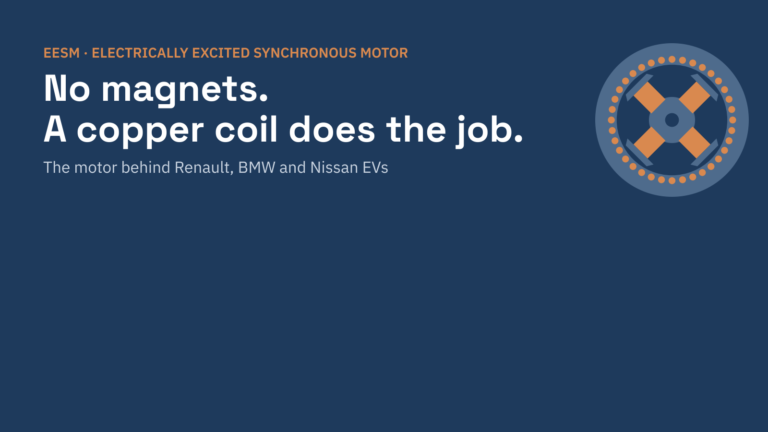
An EESM, also called a wound-rotor, externally excited or separately excited synchronous motor, replaces the rotor’s magnets with copper coils. A small direct current fed into those coils turns the rotor into an electromagnet, which then turns in lockstep with the stator’s field, just like a permanent magnet motor.
Strengths: The big advantage is control. Because the rotor field comes from current, the motor can strengthen it for low-speed torque and weaken it at high speed. A permanent magnet motor has to fight its own magnets at high rpm, which costs energy. EESMs therefore shine on the highway and produce no magnetic drag when unpowered.
Weaknesses: Energizing the rotor costs power, which trims efficiency at low speeds. Most current designs feed that current through slip rings and brushes, which wear and need a dry, sealed compartment. According to ZF, conventional designs need around 90 mm more axial length than an equivalent PMSM, so an EESM is not a drop-in replacement.
Where you find them: Renault has used EESMs for more than a decade, from the Zoe to the Megane E-Tech, Scenic E-Tech and Renault 5. The Nissan Ariya uses one, as does BMW’s fifth-generation eDrive in the i4, iX and previous iX3. BMW’s new sixth-generation system in the Neue Klasse iX3 pairs an upgraded EESM on the rear axle with an induction motor on the front. Our guide to which EVs don’t use rare earth magnets lists more models.
What’s next: Suppliers are removing the brushes by transferring power to the rotor without contact. ZF’s I2SM uses an inductive exciter inside the rotor shaft, which ZF says cuts energy transfer losses by 15% compared with conventional designs and removes the extra axial length. Mahle’s contactless transmitter works on a similar idea, and Valeo and Mahle are jointly developing the iBEE system for 220 to 350 kW motors, with commercialization reported for around 2028. Renault and Valeo’s next-generation E7A motor is planned for 2027.
3. Synchronous reluctance motors (SynRM)
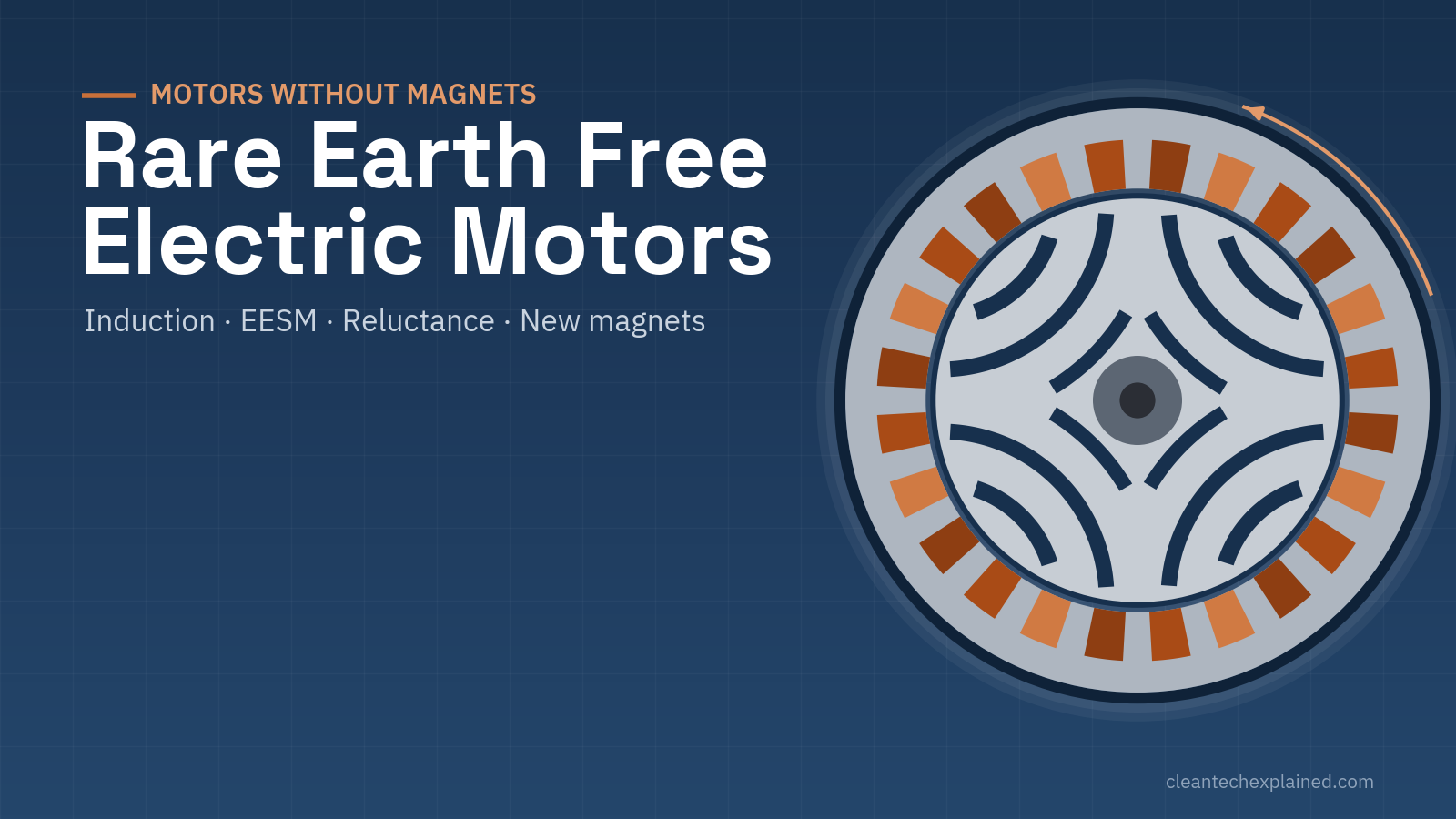
A synchronous reluctance motor has a rotor made only of laminated electrical steel, cut with carefully shaped air slots called flux barriers. Magnetic flux prefers to travel through steel rather than air, so the rotor constantly turns to align its “easy” path with the stator’s rotating field. That tendency, called reluctance torque, drives the motor.
Strengths: No magnets and no rotor current means a cool, cheap and robust rotor. Industrial motor makers such as ABB sell SynRMs for pumps and fans that reach the top industrial efficiency classes.
Weaknesses: Pure SynRMs have a low power factor, which means the inverter must be sized larger. They also tend toward torque ripple and offer lower torque density than a PMSM.
The ferrite fix: Placing inexpensive ferrite magnets inside the flux barriers creates a permanent magnet assisted SynRM. This improves the power factor and torque while staying rare earth free. Many EV motors already blend magnet torque and reluctance torque, so this is a spectrum rather than a sharp dividing line. Research continues: a German government-funded project led by RWTH Aachen is developing an axial-flux SynRM and claims a magnet-free design can cut material costs by up to 50%.
4. Switched reluctance motors (SRM)
A switched reluctance motor has teeth on both the stator and the rotor. The controller energizes stator coils in sequence, and each pulse pulls the nearest rotor tooth into alignment. The rotor is just a stack of shaped steel, the simplest rotor of any motor.
Strengths: Very low cost, extreme robustness and good tolerance of high temperatures and high speeds.
Weaknesses: The pulsed operation creates noise, vibration and torque ripple, which are unwelcome in a quiet passenger car. SRMs also need a dedicated power converter and sophisticated control software.
Where you find them: Industrial drives, appliances and some commercial vehicles. UK company Advanced Electric Machines (AEM), which builds magnet-free motors at commercial scale, raised £16 million in August 2026 to develop higher-torque products for demanding powertrains.
Option 5: keep the permanent magnet, change the magnet
Another route keeps the proven PMSM layout but uses magnets made without rare earths.
- Ferrite magnets are cheap and abundant but store roughly a tenth of the magnetic energy of NdFeB, so motors need clever rotor layouts or larger dimensions.
- Iron nitride (Fe16N2) promises much higher performance from iron and nitrogen. See our iron nitride magnets guide.
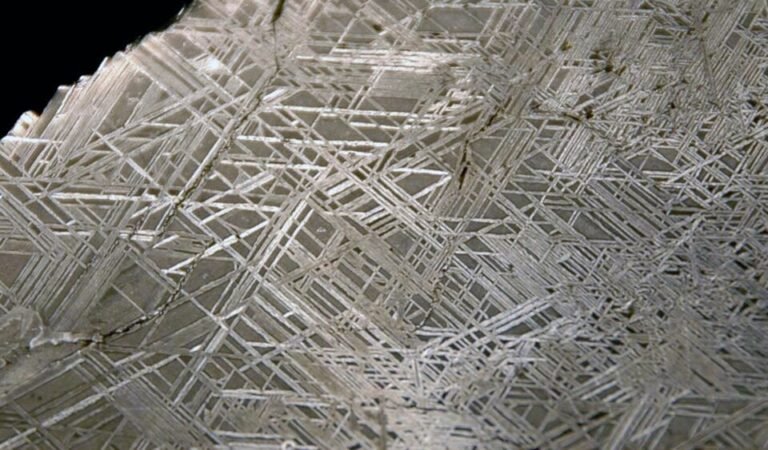
- Manganese-based magnets (MnBi and MnAl) and tetrataenite, the “meteorite magnet”, are further from commercial motors.
Tesla said at its 2023 Investor Day that its next-generation permanent magnet motor would use no rare earth elements, but it has not confirmed a production date.
A materials engineer’s note: Headline energy product (BHmax) gets most of the attention, but for a traction motor the more decisive property is coercivity at operating temperature, often 150 °C or more. A magnet that looks strong at room temperature can partially demagnetize during a hard acceleration on a hot day. This is where most rare earth free magnet candidates still struggle, and it is why switching to motors that need no permanent magnet at all is often the faster path.
Rare earth free electric motors compared
| Motor type | Rare earths | Efficiency profile | Torque density | Main drawback | Production EV examples |
|---|---|---|---|---|---|
| PMSM (NdFeB magnets) | Yes | Highest at low and medium load | Highest | Magnet supply and price | Most EVs on sale |
| Induction (ASM) | No | Good at high load, weaker at light load | Medium | Rotor heat losses | Early Tesla Model S, first Audi e-tron, BMW iX3 (2026) front axle |
| EESM (wound rotor) | No | Strong at highway speeds | Medium to high | Rotor excitation losses, brushes | Renault 5, Megane E-Tech, Nissan Ariya, BMW iX3 rear axle |
| Synchronous reluctance (incl. ferrite-assisted) | No | High in steady operation | Medium | Low power factor, torque ripple | Mainly industrial; EV research |
| Switched reluctance | No | Moderate to good | Medium | Noise and vibration | Industrial, niche vehicles |
| PMSM with non-rare-earth magnets | No | Depends on magnet | Low to medium today | Weaker, heat-sensitive magnets | Mostly pre-production |
Does a rare earth free motor mean less range?
Not necessarily. The motor is only one part of an EV’s efficiency; the inverter, gearbox, aerodynamics, tyres and weight matter just as much. Differences between well-designed motor types are usually a few percentage points of motor losses, and automakers can recover them elsewhere.
BMW is a good example. Its Neue Klasse drive system uses no rare earth magnets in either motor, yet BMW says it reduces energy losses by 40% compared with its previous generation, while cutting weight by 10% and manufacturing cost by 20%. Those gains come from the whole system, including 800-volt electronics, not from the motor type alone.
A popular strategy is to mix technologies: a highly efficient main motor does most of the work, while an induction motor on the second axle adds traction and power and idles with no drag when not needed.
Rare earth free motor does not mean rare earth free car
Even an EV with magnet-free traction motors still contains small NdFeB magnets in speakers, power steering, window lifters, seat motors, pumps and fans. The traction motor is by far the largest single user of magnet material in the car, so eliminating it removes most of the exposure, but not all of it.
What this means if you are buying an EV
- Look for terms such as “EESM”, “externally excited synchronous motor”, “wound rotor”, “asynchronous” or “induction” in the technical specifications. “PSM” or “PMSM” means permanent magnets.
- Don’t choose a car on motor type alone. Official range and consumption figures already reflect the motor’s efficiency.
- Rare earth free motors may help with long-term supply stability and a lower manufacturing footprint, but these benefits are mostly invisible to the driver.
Outlook: will magnet-free motors take over?
Permanent magnet motors will remain the majority for years, especially in China, where magnets are cheap and close at hand. Outside China, the share of rare earth free designs is likely to grow as brushless EESMs reach production around 2027 and 2028 and as automakers hedge against export controls. Startups are also entering the field; India’s Vimag Labs, for example, has patented a magnet-free “virtual magnet” motor, though it is still at pilot stage and its claims have not been verified at production scale.
The next milestone to watch is November 10, 2026, when China’s suspension of its October 2025 export controls is due to expire. We will update this guide once the outcome is clear.
Frequently asked questions
What is a rare earth free electric motor?
It is a motor that produces torque without magnets containing rare earth elements such as neodymium, dysprosium or terbium. The main types are induction motors, electrically excited synchronous motors, and synchronous or switched reluctance motors.
Are rare earth free motors less efficient?
At light loads, a good permanent magnet motor is usually slightly more efficient. At highway speeds, an EESM can match or beat it. Across a whole vehicle, the difference is small and often offset by other design choices.
Does Tesla use rare earth free motors?
Partly. Tesla built its early cars around induction motors and still uses them on the front axle of some dual-motor models, but its main drive motors use permanent magnets. Tesla has announced a future permanent magnet motor without rare earths but has not given a production date.
Which is better, an EESM or an induction motor?
They suit different jobs. EESMs are more efficient as the main drive motor, especially at speed. Induction motors are cheaper and ideal as a secondary motor that often freewheels. BMW’s latest iX3 uses one of each.
Will rare earth free motors make EVs cheaper?
They can reduce motor material costs and protect against magnet price spikes, but the motor is a small share of an EV’s total cost compared with the battery. Expect modest savings rather than dramatic price cuts.
Sources
- Electrek, A $5M startup claims rare earth-free electric motor breakthrough (IEA figures, Tesla and Valeo timelines), July 13, 2026
- BMW Group Press, The All-New BMW iX3, September 5, 2025
- GearJunkie, 2026 BMW iX3 Revealed (Gen6 efficiency, weight and cost figures)
- Valeo, Valeo and MAHLE expand their product range of magnet free electric motors to upper segment applications, October 2024
- New Atlas, Magnet-free induction motor aims to nearly halve carbon emissions (Renault–Valeo E7A)
- electrive, ZF prepares next-gen electric motor free from permanent magnets, September 4, 2023
- electrive, PEM announces research into axial-flux motor without rare-earth magnets, February 10, 2026
- Tech.eu, AEM secures £16M to accelerate rare earth-free electric motor innovation, August 4, 2026
- Tech Times, China Rare Earth Export Controls: April Curbs Still Bite After Beijing Summit, May 26, 2026
- Asia Times, How US blindly ceded its rare earth dominance to China (Ford plant idling), September 2026
Featured image and diagrams: original graphics by CleanTech Explained.