China’s Rare Earth Export Controls: What Is in Force and What Is Paused

China’s rare earth export controls are back on the calendar. In November 2025, Beijing suspended a sweeping package of new controls for one year, until November 10, 2026. In September 2026 the wider US–China trade truce was extended to January 10, 2027, but China has not yet published a legal notice moving the rare earth date. This guide explains what is controlled today, what is suspended, what could return, and what it means for magnets, motors and the companies that buy them.
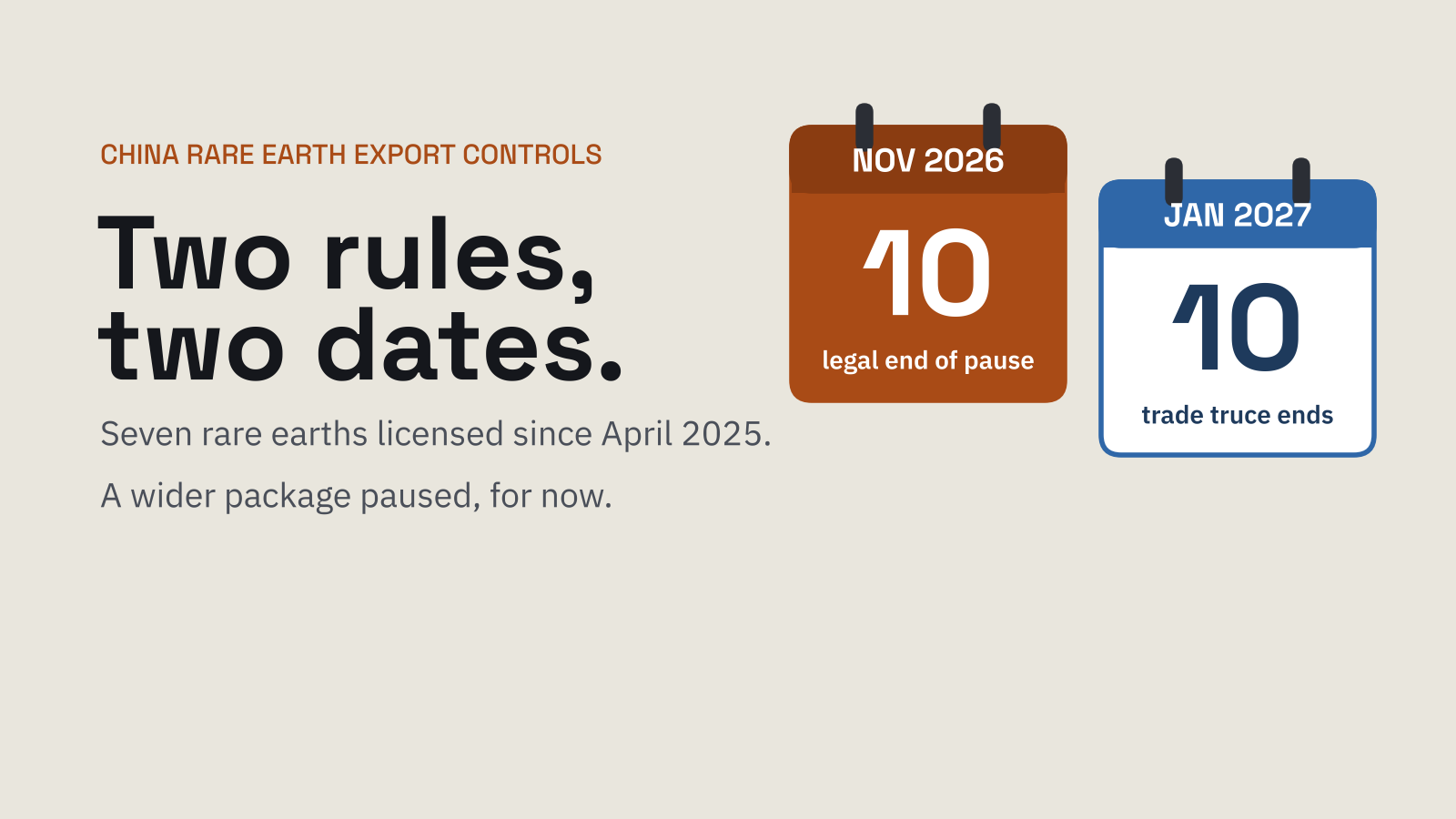
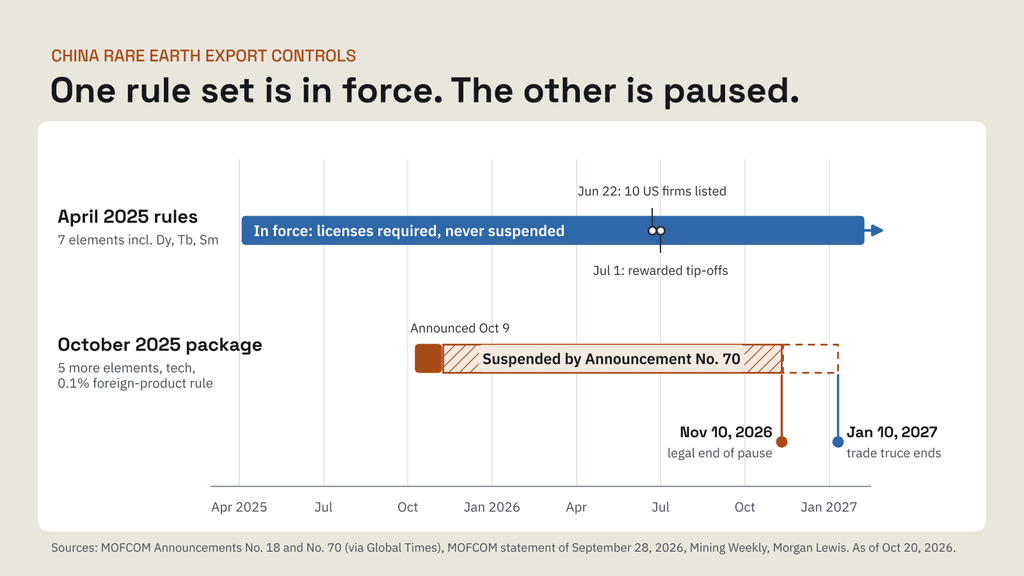
Short answer: Two sets of rules matter. The April 2025 controls on seven medium and heavy rare earths, including dysprosium and terbium, are in force and were never suspended. The October 2025 package, which added five more elements, equipment, technology and a rule reaching foreign-made products with as little as 0.1% Chinese rare earth content, is suspended. The legal suspension ends on November 10, 2026; the trade truce points to January 10, 2027. As of November 3, 2026, China has not published a notice changing the November 10 date.
Key takeaways
- Licenses have been required since April 4, 2025 to export samarium, gadolinium, terbium, dysprosium, lutetium, scandium and yttrium, along with some magnets that contain them. That has not changed.
- The October 9, 2025 package (MOFCOM Announcements Nos. 55 to 58, 61 and 62) was suspended by Announcement No. 70 from November 7, 2025 to November 10, 2026.
- On September 28, 2026, China’s commerce ministry said the US–China arrangement now runs to January 10, 2027, but the statement did not name rare earths. No legal notice had followed as of November 3.
- Enforcement has tightened in 2026: China blacklisted two US rare earth producers in June and opened a rewarded tip-off channel for export control violations in July.
- If the package returns, the biggest change is extraterritorial: products made outside China could need Chinese approval if they contain 0.1% or more Chinese-origin rare earths by value.
- Neodymium and praseodymium, the main magnet metals, are not on either list, but most NdFeB magnets for hot applications also contain dysprosium or terbium.
How we got here: a timeline
| Date | What happened | Status |
|---|---|---|
| April 4, 2025 | Announcement No. 18: export licenses for seven medium and heavy rare earths and related products | In force |
| October 9, 2025 | Six announcements: five more elements, rare earth equipment and materials, lithium battery and graphite anode materials, superhard materials, a 0.1% extraterritorial rule, and controls on rare earth technology | Suspended |
| Late October 2025 | Trump–Xi meeting in South Korea; trade truce agreed after talks in Kuala Lumpur | Basis of the pause |
| November 7, 2025 | Announcement No. 70 suspends the October package until November 10, 2026 | Legal end date |
| June 22, 2026 | China adds 10 US entities to its export control list, including rare earth producers MP Materials and USA Rare Earth | In force |
| July 1, 2026 | Announcement No. 26 of 2026 takes effect: a reporting channel, with rewards, for suspected violations of strategic mineral export controls | In force |
| September 23–28, 2026 | US and China extend the trade arrangement to January 10, 2027, during Xi’s state visit to Washington | Rare earths not named |
| November 10, 2026 | Suspension under No. 70 expires unless China amends it | Not amended as of October 20 |
| January 1, 2027 | US defense rule bans NdFeB and SmCo magnets with any Chinese supply-chain step | Upcoming |
| January 10, 2027 | End of the extended US–China trade arrangement | Upcoming |
What is controlled right now
The April 2025 controls cover seven elements: samarium, gadolinium, terbium, dysprosium, lutetium, scandium and yttrium. Exporters need a license from China’s Ministry of Commerce for the metals, alloys, oxides, compounds and some magnets that contain them. Licenses are reviewed case by case, which in practice means delays and, for some buyers, refusals.
The effect shows up in trade data. Chinese exports of dysprosium, terbium and yttrium have run roughly 50% below their pre-April 2025 levels, and prices outside China have pulled far away from prices inside it. In September 2026, dysprosium oxide in Europe cost about 16 times the Chinese domestic price.
China has also been enforcing the rules it already has more actively. In June 2026 it put 10 US entities on its export control list, among them MP Materials and USA Rare Earth, the two largest US rare earth producers. Nobody, in China or elsewhere, may now transfer Chinese-origin dual-use items to them. From July 1, 2026, Announcement No. 26 lets companies and individuals report suspected violations of strategic mineral export controls, with rewards for verified tips. Neither step needed the suspended October package.
What is suspended, and what could come back
The October 2025 package was much broader than the April list. If it returns in full, it would:
- Add five more rare earths: holmium, erbium, thulium, europium and ytterbium.
- Control equipment and materials used to mine, separate and process rare earths.
- Control technology, including know-how for mining, smelting, separation, magnet making and recycling, and services such as commissioning and maintenance of production lines.
- Reach foreign-made products. Items made outside China that contain 0.1% or more Chinese-origin rare earths by value, or that were made with Chinese rare earth technology, could need Chinese authorization to be exported, with stricter treatment for military and some advanced-technology users.
- Cover battery materials outside rare earths: high-energy lithium-ion batteries, cathode materials and graphite anode materials.
The 0.1% rule is the part that worries manufacturers most. A motor assembled in Mexico or a turbine built in Germany could fall under Chinese licensing because of the magnets inside it. Enforcing such a rule abroad is difficult, but suppliers tend to comply rather than risk losing access to Chinese material.
November 10 or January 10?
The confusion comes from two different documents. Announcement No. 70, the legal text, says the suspension runs until November 10, 2026. The September 28, 2026 statement from China’s commerce ministry says the two countries agreed to extend “the arrangement” to January 10, 2027, and hope to find a further extension through high-level talks before the end of the year. That statement covers tariff and non-tariff measures in general and does not mention rare earths.
Most analysts expect the rare earth pause to follow the truce, but until China publishes a numbered announcement amending No. 70, the legal date is still November 10. As of November 3, 2026, no such announcement had been published.
Three scenarios
| Scenario | What it means | Who feels it |
|---|---|---|
| Extend the pause | Suspension moved to January 10, 2027 or later; April 2025 licensing continues | Little change; uncertainty rolls forward two months |
| Selective return | Some measures restored, for example technology and equipment, or controls aimed at defense and aerospace users | Magnet makers building plants outside China; defense supply chains |
| Full return | All six October 2025 announcements take effect, including the 0.1% rule | Every manufacturer using Chinese rare earths, including outside China |
Even in the worst case, the result would be broader licensing rather than a blanket ban. China still sells rare earths abroad; the controls decide who gets them, how fast and with what paperwork.
Why China holds this leverage
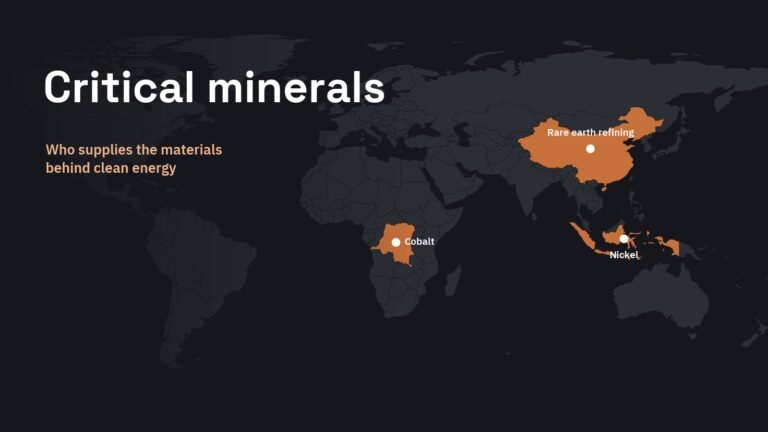
China mined about 270,000 of the world’s 390,000 tonnes of rare earth oxide in 2025, roughly 69%, and handles up to 90% of processing. For the magnet metals the concentration is even higher further down the chain: about 84% of NdPr oxide and around 86% of magnet making. Our guides to rare earth elements and neodymium explain how the supply chain works.
Mining alone does not break that dependence. Separation, metal making and magnet production take years to build. A 2010 US government estimate put the time to rebuild a full domestic supply chain at up to 15 years, and even with a 4.4-fold rise in NdPr output outside China, Bloomberg Intelligence projects a global shortfall of about 36% by 2030.
What it means for magnets, EVs and wind turbines
Neodymium and praseodymium are not on either control list, so standard neodymium magnets are not directly restricted. The problem is heat. Magnets for EV motors and wind generators usually need high-temperature grades, which add dysprosium or terbium, both already controlled. That is why carmakers have been cutting heavy rare earths with grain boundary diffusion, hot-deformed magnets and motors that need no rare earths at all.
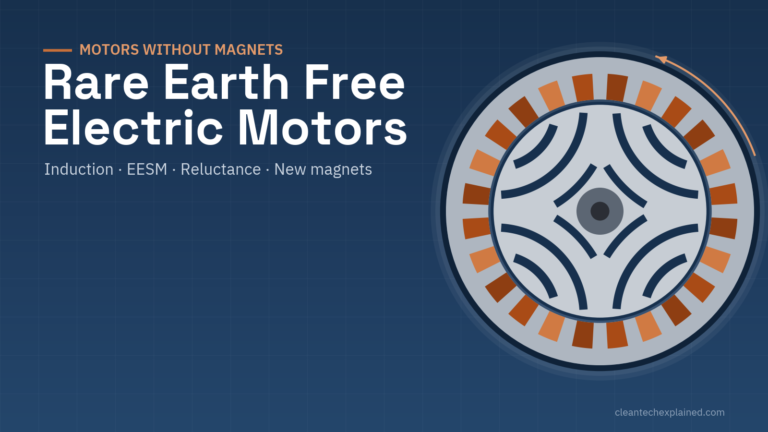
- Motors without magnets: EESM motors, used by Renault and BMW, and induction motors avoid the issue. See rare earth free electric motors and EVs without rare earth magnets.
- Cheaper substitutes: cerium magnets and ferrite magnets replace NdFeB where some loss of strength is acceptable.
- New materials: iron nitride and other rare earth magnet alternatives are moving toward production.
- Recycling: rare earth magnet recycling is the fastest way to add non-Chinese supply.
What buyers can do now
- Ask suppliers in writing which date they are planning against, November 10 or January 10, and whether any of your parts contain Chinese-origin rare earths above 0.1% by value.
- Map which parts contain dysprosium, terbium or samarium; those are under license today regardless of the November outcome.
- Check whether any supplier or customer is on China’s export control list; Chinese-origin dual-use items cannot be passed on to listed companies.
- For US defense work, check exposure to the January 1, 2027 magnet sourcing rule.
- Look at lower heavy rare earth grades or magnet-free designs where the duty cycle allows.
FAQ
Does China ban rare earth exports?
No. There is no general China rare earth export ban. China requires export licenses for certain rare earths and related products, and it bars exports to companies on its export control list. Licenses can be delayed or refused, but exports continue.
Which rare earths does China control?
Since April 2025: samarium, gadolinium, terbium, dysprosium, lutetium, scandium and yttrium. The suspended October 2025 package would add holmium, erbium, thulium, europium and ytterbium.
Are neodymium magnets affected?
Not directly, since neodymium and praseodymium are not listed. High-temperature neodymium magnets that contain dysprosium or terbium can be affected, and the suspended 0.1% rule could reach products containing Chinese-made magnets.
What is the 0.1% rule?
Part of the October 2025 package, now suspended. It would require Chinese authorization to export some foreign-made products that contain 0.1% or more Chinese-origin rare earths by value, or that were made using Chinese rare earth technology.
When does the suspension end?
The legal notice says November 10, 2026. The US–China trade arrangement was extended to January 10, 2027, but China had not formally moved the rare earth date as of November 20, 2026.
Sources
- Global Times: MOFCOM suspends export control measures on rare earths, lithium batteries and other resources (November 7, 2025)
- Global Times: MOFCOM on extending the China–US arrangement to January 10, 2027 (September 28, 2026)
- Rare Earth Directory: China export controls timeline and announcement numbers
- Electronics Risk Brief: The truce now ends on January 10; the legal text still says November 10 (October 12, 2026)
- Mining Weekly: China places two US rare earths producers on export control list (June 22, 2026)
- Morgan Lewis: Recent China export control actions signal active enforcement for rare earths and strategic minerals (July 2026)
- CTILS: China escalates strategic mineral export controls to all-of-society oversight (Announcement No. 26 of 2026)
- Rinnovabili: Trump–Xi summit and the rare earth suspension (September 25, 2026)
- FXStreet: What Beijing is deciding before November 10 (October 14, 2026)
- Mining Technology: China rare earth export pause nears expiry (GlobalData production figures)
This article reflects the author’s personal views and publicly available information as of November 20, 2026. It is general information, not legal or trade compliance advice.